The benefits of team building
The right activity starts with your team’s needs and what you want to achieve together.
A team-building activity provides the team with a different setting in which to communicate, collaborate and discover how they work together. Choosing the activity starts with a simple question: what would you like to see improve amongst colleagues after the event?
The study Impact of Team Building Exercises on Team Effectiveness, published in 2015 and carried out in three public-sector banks in India, reported improvements in participants’ assessments of team effectiveness following team-building exercises. The results relate to the specific context of the research and the perceptions measured, and do not guarantee the same effects for every team or activity.
When it comes to organising, it’s important to link the experience to a specific need: integrating new colleagues, communication between departments, practising collaboration, or reconnecting a team working remotely.
New vs. established teams
Both newly formed teams and those that have been working together for years can benefit from team-building activities, but they have different needs.
For a new team, the focus can be on getting to know one another and on those first experiences of working together. A group activity gives participants the opportunity to discover how others communicate and what each person can bring to the team.
In an established team, the aim may be to break out of a rut, encourage collaboration between sub-groups or prepare for a change. Colleagues already know one another, so the experience should provide them with a challenge that is relevant to the stage they are at.
What sort of team-building activity would work for my team?
Before choosing an activity, clarify the objective, the number of participants, the time available, the budget and the venue. Also take into account the group’s energy levels, the participants’ mobility and the types of activities they feel comfortable with.
The objective helps you choose the activity:
- Designed to encourage exploration and interaction amongst colleagues, Go Team combines exploring a location with missions and challenges to be tackled as a team;
- For exercise and energy, Record Breakers offers a circuit of outdoor challenges involving strategy, coordination and competition;
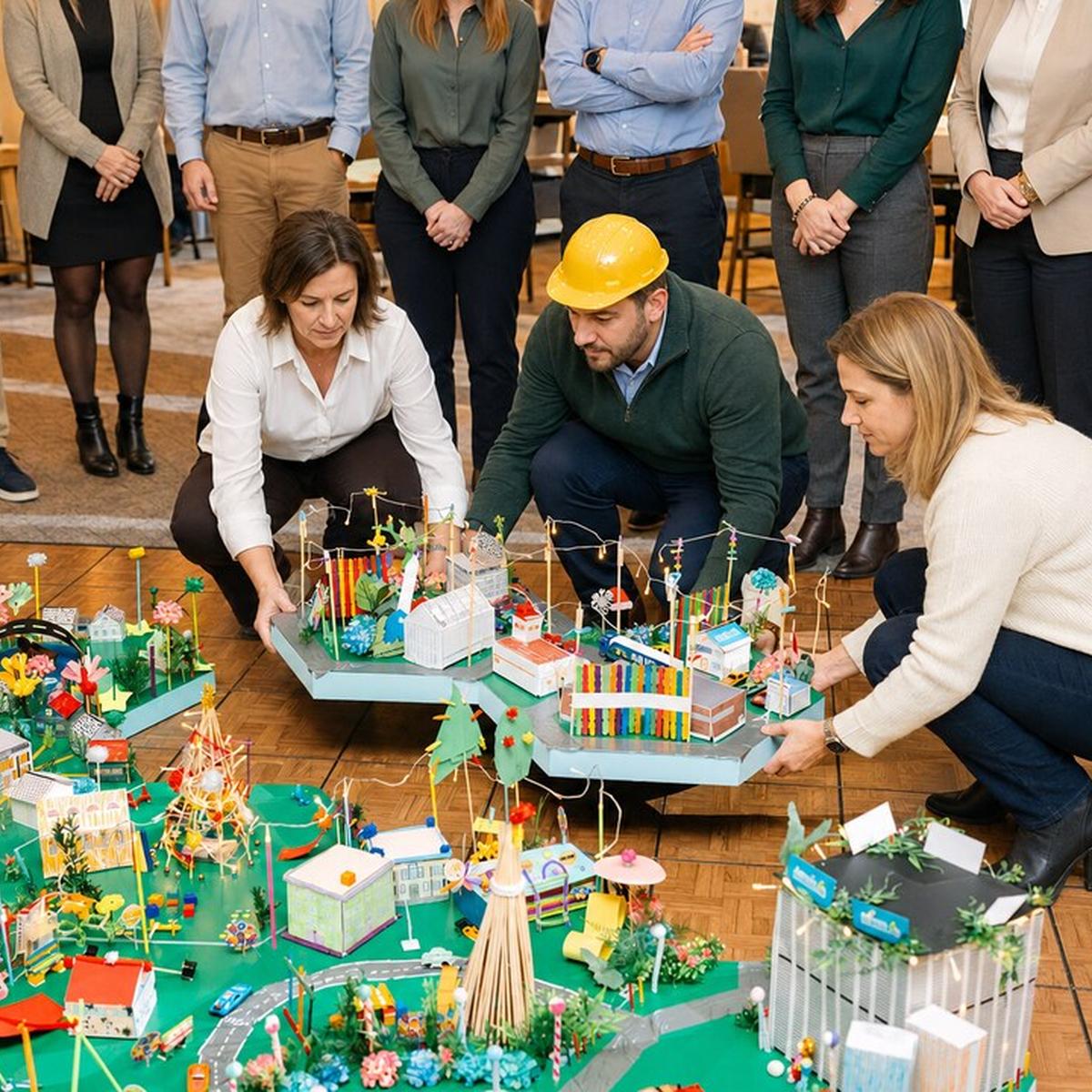
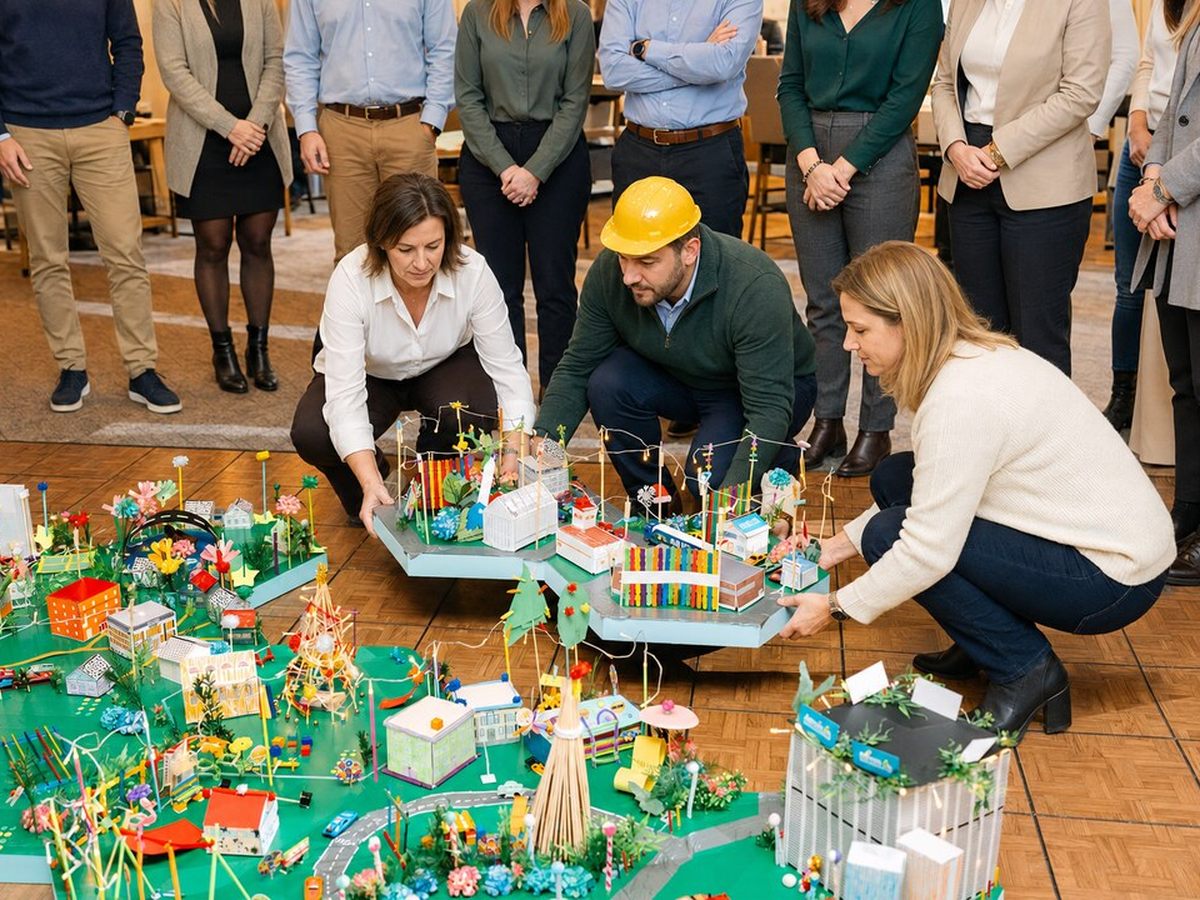
- To facilitate planning and collaboration between departments, City Build involves teams in building a shared city;
- For creativity and a result that can be displayed in the office, The Big Picture brings together the participants’ contributions into a single piece of work;
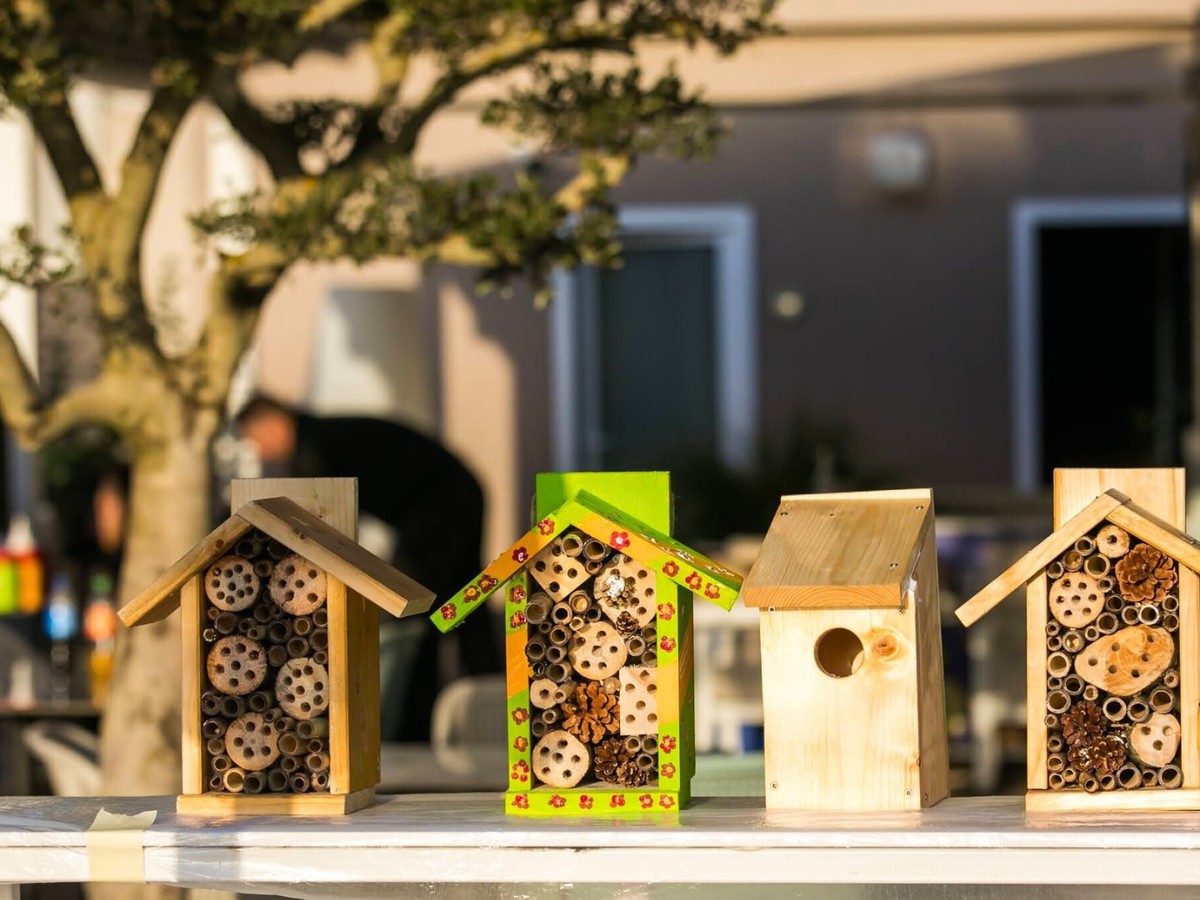
- To explore sustainability and social responsibility, Impact combines interactive challenges with themes inspired by the Sustainable Development Goals.
For example, when you bring together colleagues from different departments, you could start with an icebreaker and follow it up with a challenge that requires everyone’s input. The final choice depends on the group’s objective, not just on how spectacular a concept might seem.
Team building vs. teamwork
Team building and teamwork are linked, but they serve different purposes. A team-building activity provides a setting in which people practise communication and collaboration. Teamwork is evident on a day-to-day basis, in projects, meetings and decision-making.
The experience gained at the event can become a shared point of reference. To make further use of it, the team needs to discuss what they observed and how they can apply it in real-life work situations.
The basics of team building
A well-designed team-building activity is based on a few key points:
- a clear objective, such as integrating new colleagues or fostering collaboration between departments;
- a format suitable for the group, tailored to the number of participants, their interests and their level of mobility;
- clear instructions and guidance, so that everyone understands how they can contribute;
- a closing discussion, in which participants can identify what worked and what they would change;
- a follow-up step, whereby a useful conclusion is revisited after the event.
An example of a practical objective would be for the team to practise dividing up responsibilities before starting a task. The activity and the concluding discussion can be structured around this behaviour.
The basics of teamwork
Clear communication, mutual respect, a clear understanding of roles and shared objectives help the team to work together. The way in which colleagues ask for help, make decisions and deal with differences of opinion also matters.
A team challenge makes these behaviours easier to spot. Who suggests a plan? How does information flow? Are everyone’s ideas taken into account? The discussion about the experience can start from such specific situations.
What can your team gain from team building?
1. Practising communication
A shared task requires participants to explain, listen and check that they have all understood the same thing. The activity can highlight both useful habits and any obstacles that are worth discussing.
2. Supporting motivation
An experience in which everyone can contribute and where effort is recognised can energise the group. This makes even more sense when it is linked to the way in which people are supported in their day-to-day work.
3. Encouraging creativity
A challenge that differs from day-to-day tasks provides scope for new ideas. Colleagues can test solutions, observe the results and adjust their approach together.
4. Practising skills
Planning, negotiation, prioritisation and decision-making can be put into practice through an activity tailored to the group’s objectives. Facilitation and the concluding discussion help participants to relate these concepts to situations in the workplace.
5. Breaking down barriers between colleagues
Mixed teams provide an opportunity for interaction between people who rarely work together or who have different roles within the organisation. A shared experience can serve as a starting point for more open working relationships.
For smaller teams, discover our selection of 11 team-building activities for small groups.
In conclusion
A team-building activity should be designed around a genuine need of the team. The activity itself, the way it is facilitated, and the discussions following the event can help participants carry the experience forward into their projects.
For definitions, formats and advice on planning, see our complete guide to team building.
You can start by exploring team-building activities. For a personalised recommendation, please send us your objective, the number of participants, the timeframe, the location and the time available via the contact form.
Similar articles

 September 30th, 2026
Some of the productions that caught our attention lately have very little in common
 August 19th, 2026
Every year, the same line item forces the same decision: put the whole event

 July 29th, 2026
Ever wonder why the world's biggest events just... work? If you're the person who

 July 21st, 2026
Every week, the event industry raises the bar a little higher. Not always through