Four projects rethinking experience design
Some experiences impress you with their scale. Others do something more subtle: they change how you move, who you meet or how you interact with what’s around you.
For this edition of Curated by UNIVERSUM, we’ve picked four projects that approach experience design from very different angles. From a VR ride through the Bavarian forest to a rotating dinner table, each offers something worth looking at beyond the visuals.
1. A VR ride through the forest
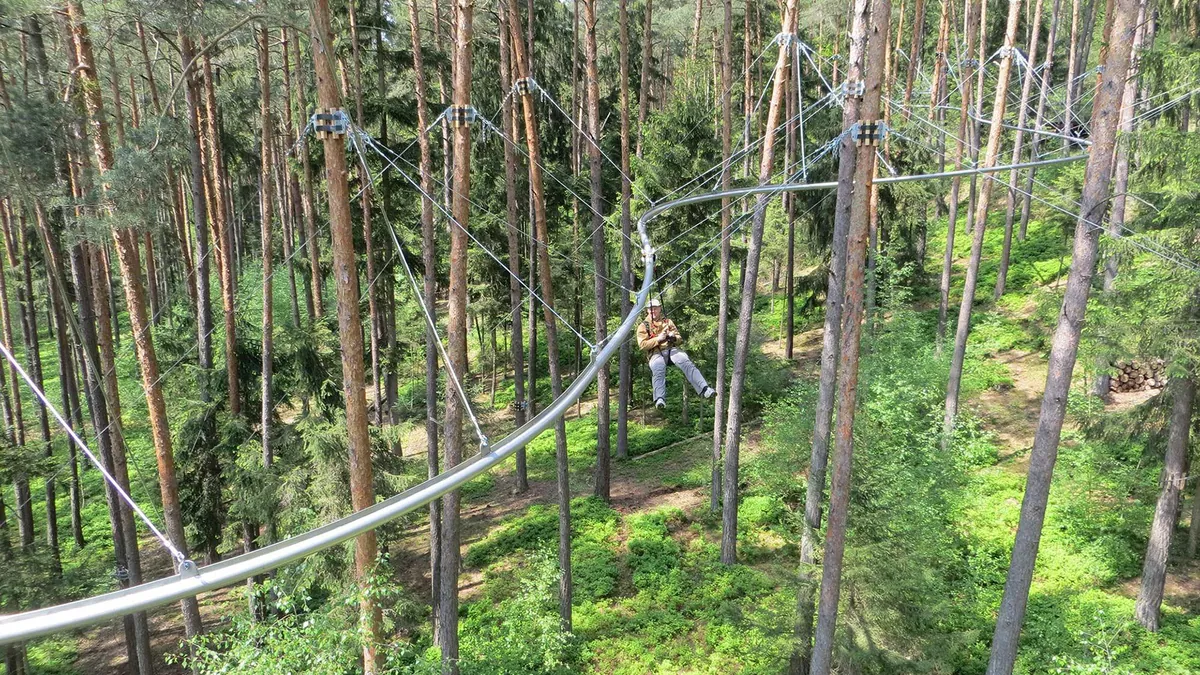
A ride through the forest, with a completely different world in sight.
At Fly-Line Ruhpolding in Germany, visitors travel along a 500-metre suspended route through the forest. But with a VR headset on, the journey becomes an adventure through caves, mountain landscapes and a world inspired by local folklore.
The experience synchronises the virtual environment with the ride’s actual movement. Visitors can even collect virtual gold using hand gestures, while a mixed-reality character appears at the end to reveal their results.
The interesting part is that the ride itself provides the physical movement. The VR experience builds on something that’s already happening in the real world.
Why we think it matters
VR experiences often require a lot of effort to simulate movement and make the environment feel convincing. Here, the physical attraction does much of that work.
It’s an interesting example of how technology can add a new layer to an existing experience, rather than requiring an entirely new one to be built from scratch.
2. Inside Es Devlin’s creative process
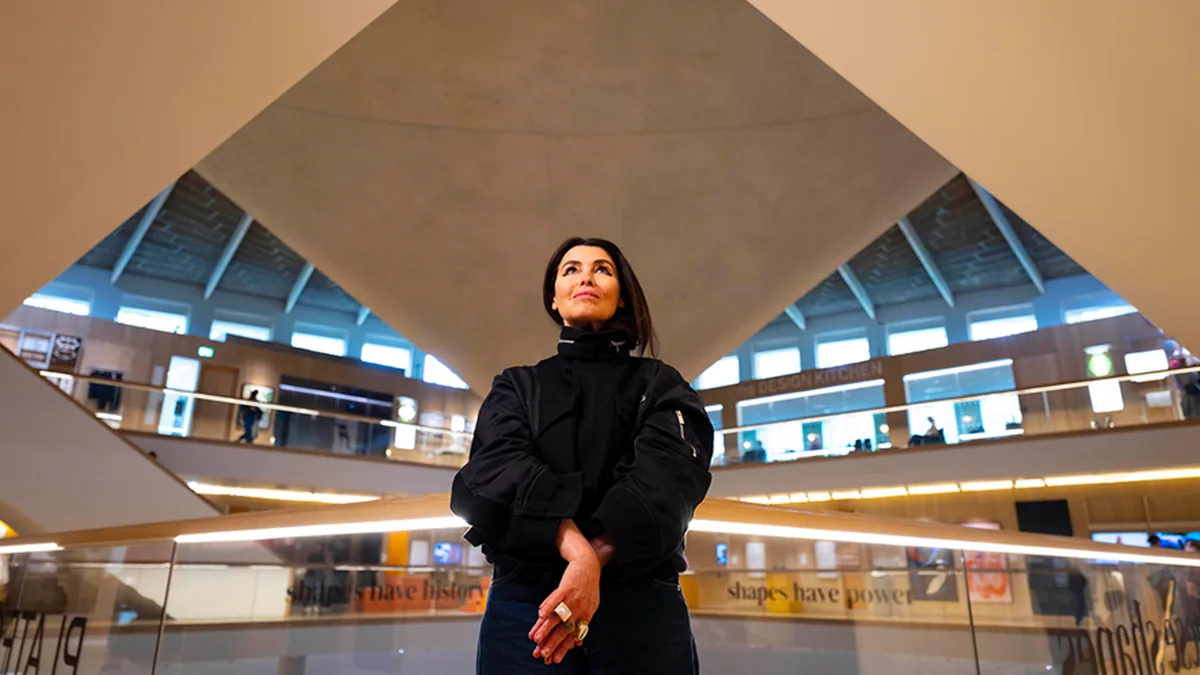
Es Devlin opens up the creative process behind the spectacle.
From stadium concerts to monumental public installations, Es Devlin has spent three decades creating some of the most recognisable stage and spatial designs in contemporary culture.
Now, her first European retrospective, Es Devlin: Other Worlds, at London’s Design Museum, takes visitors behind the finished work.
The exhibition brings together sketches, models, diaries, sculptures and installations, including a reconstruction of her studio and a circular display tracing 30 years of projects.
Why we think it matters
We usually encounter stage design when everything is finished: the lights are on, the audience is in place and the production is running.
What makes this exhibition interesting is the opportunity to see everything that happens before that moment. The early sketches, experiments and collaborations are as much a part of the work as the final installation.
It’s also a useful reminder that ambitious productions don’t necessarily begin with ambitious-looking ideas.
3. Designing around the crowd
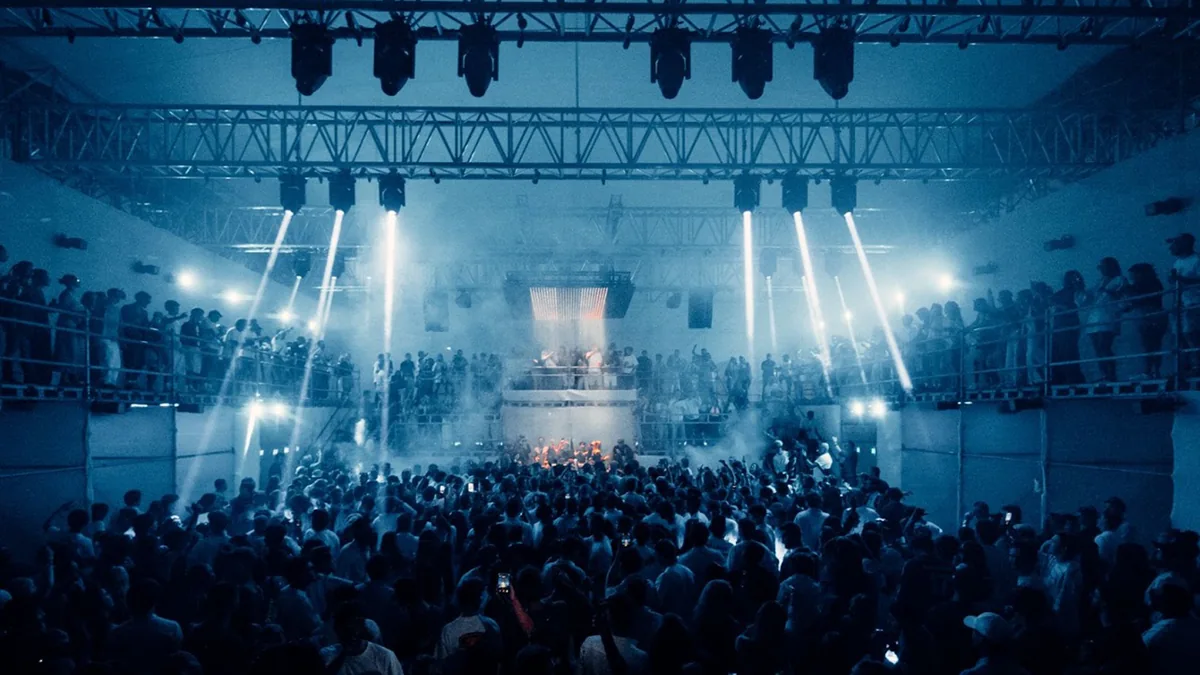
What if the crowd became the main attraction again?
For one weekend, Temporary Pleasure brought the architecture of a traditional nightclub into the middle of Belgium’s WeCanDance festival.
Designed by John Leo Gillen, The Superclub was a temporary structure built for around 3,000 people, with a sunken dancefloor, balconies surrounding the crowd and a DJ booth positioned at floor level rather than above everyone.
The idea was to move away from the usual festival setup, where everyone faces the same stage, and create a space where people could see, move around and interact with one another.
After the weekend, the entire structure was dismantled.
Why we think it matters
Event layouts have a bigger influence on audience behaviour than we sometimes give them credit for.
By changing where people stand, what they can see and how they move through the space, you can change the social dynamics of an event without adding another activity to the agenda.
There’s also something interesting about building a space that exists for just one weekend. Its temporary nature is part of what makes the experience special.
4. Rethinking the dinner experience
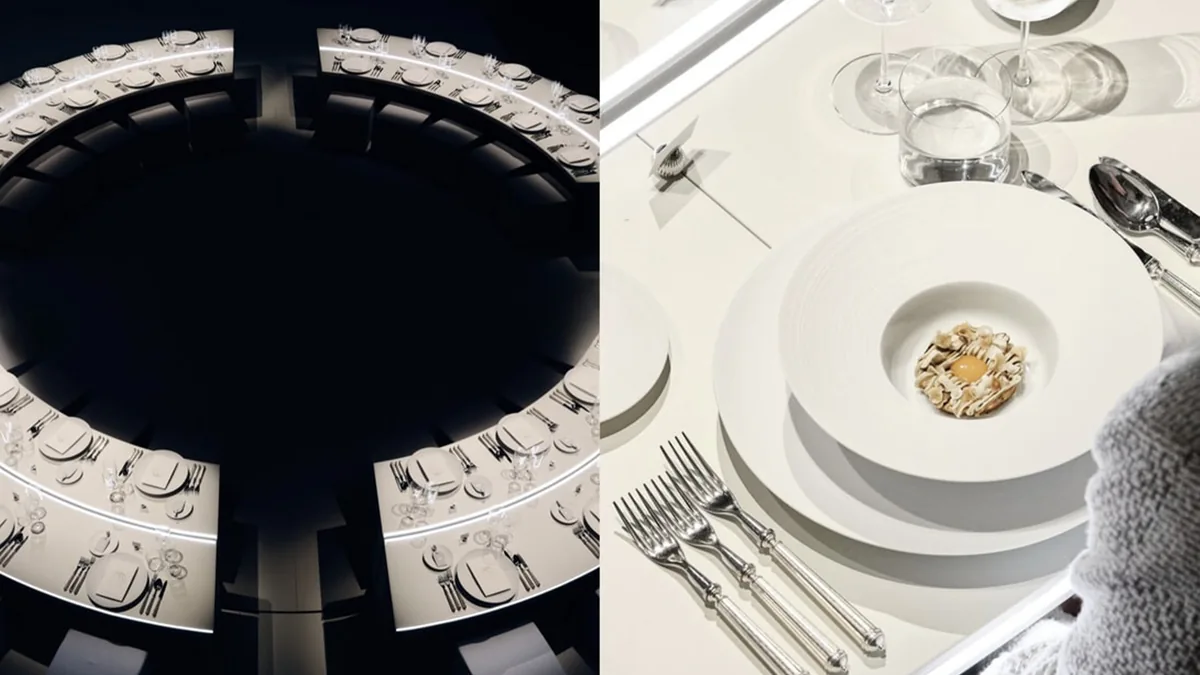
Louis Vuitton found a new way to get people talking over dinner.
We’ve all been to dinners where the seating plan determines who you talk to for the entire evening. For a recent private dinner in London, Louis Vuitton, in collaboration with Es Devlin and Opus 11, took a different approach.
Guests sat in two concentric circles, facing one another. The outer circle stayed in place while the inner seating platform slowly rotated between courses, introducing guests to different conversation partners without anyone having to leave their seat.
By the end of the evening, participants had the opportunity to meet five new people. The catering service and table movements were carefully coordinated to make the transitions work.
Why we think it matters
This is probably the most directly applicable example for corporate events.
Networking is often treated as something that happens naturally once you put people in the same room. But the way you organise the space can make those conversations easier to start.
Here, the seating arrangement became part of the experience itself. And while the rotating mechanism is certainly impressive, the idea behind it is surprisingly straightforward: help people meet more people.
Design for what people will actually do.
Good event design isn’t just about how a space looks. It’s about what that space encourages people to do.
And that’s something worth considering from the very beginning of the planning process, not once the venue, stage and technical setup have already been decided.
Think about a conference where the room layout makes it easier for people to participate, a networking event where the seating arrangement encourages new conversations, or a brand activation where the interaction feels natural rather than forced.
None of these necessarily require a bigger production budget. Sometimes, it’s about making better use of the space, rethinking a familiar format or giving an existing element a new purpose.
The question we find most useful isn’t just “What should this event look like?” but “What do we want people to do once they’re there?”
And that’s a question worth asking before the first design is even on the table.
Planning something bold? Bring us the brief.
From team buildings and corporate events to brand activations and large-scale productions, we’re always up for a good challenge.
Let’s chat about your next event!
Article structure
Similar articles
 Published on: 30 September 2026
Three productions showing how spaces can shape the story and become part of the experience.
 Published on: 19 August 2026
One major event or several smaller experiences? How to make your annual corporate events budget work harder.
 Published on: 29 July 2026
What sport and entertainment can teach us about building events that connect with audiences and leave an impression.
 Published on: 21 July 2026
Three productions exploring fresh possibilities for live events through creativity, technology and audience engagement.